Glaucoma Screening and Early Signs: Tech We Use on Long Island
Glaucoma 101: subtle signs, smart screening, and the tech we use to catch it early
Glaucoma is often called the silent thief of sight for a reason. In its early stages, most people feel completely normal, yet tiny amounts of optic nerve damage can be happening in the background. By the time vision changes are obvious, that damage is usually permanent.
The good news: modern screening can flag risk early, track changes precisely, and guide treatment that protects your vision for the long term. If you are over 40, have a family history of glaucoma, are diabetic, or are caring for an older adult, this guide will help you recognize warning signs and understand how Perspective Eye Care detects problems early.
At Perspective Eye Care’s Bellport and Coram locations, the team uses advanced tests to assess risk, confirm diagnosis, and monitor progression over time. They pair that technology with clear explanations so patients understand exactly what is being monitored and why.
What glaucoma is and why early disease is usually symptomless
Glaucoma is a group of eye diseases that damage the optic nerve, the cable that carries visual information from your eye to your brain. The most common type, primary open-angle glaucoma, progresses slowly and painlessly. Pressure in the eye, called intraocular pressure (IOP), can be elevated, but not always. Another form, normal-tension glaucoma, damages the nerve even when IOP is within statistically normal ranges. Angle-closure glaucoma can present suddenly with pain and requires urgent care.
Early glaucoma rarely affects how you see day to day. Peripheral vision is typically impacted first, and your brain is remarkably good at filling in gaps. That is why screening matters even when you feel fine.
Eight warning signs that warrant prompt eye care
Glaucoma can be quiet, but certain symptoms should never be ignored. Contact an eye care professional promptly if you notice:
- Halos or rainbows around lights, especially at night
- Hazy or blurred vision that does not clear with blinking
- One-sided or severe eye pain or headache
- Redness with pain or nausea
- Sudden loss of peripheral vision or a shadow in your side vision
- Frequent changes in glasses prescriptions without clear cause
- Increased light sensitivity or glare
- A family history of glaucoma combined with any of the above symptoms
Any sudden vision change is considered urgent. Perspective Eye Care provides same-day emergency guidance at 631-286-4014.
How Perspective Eye Care screens and monitors for glaucoma
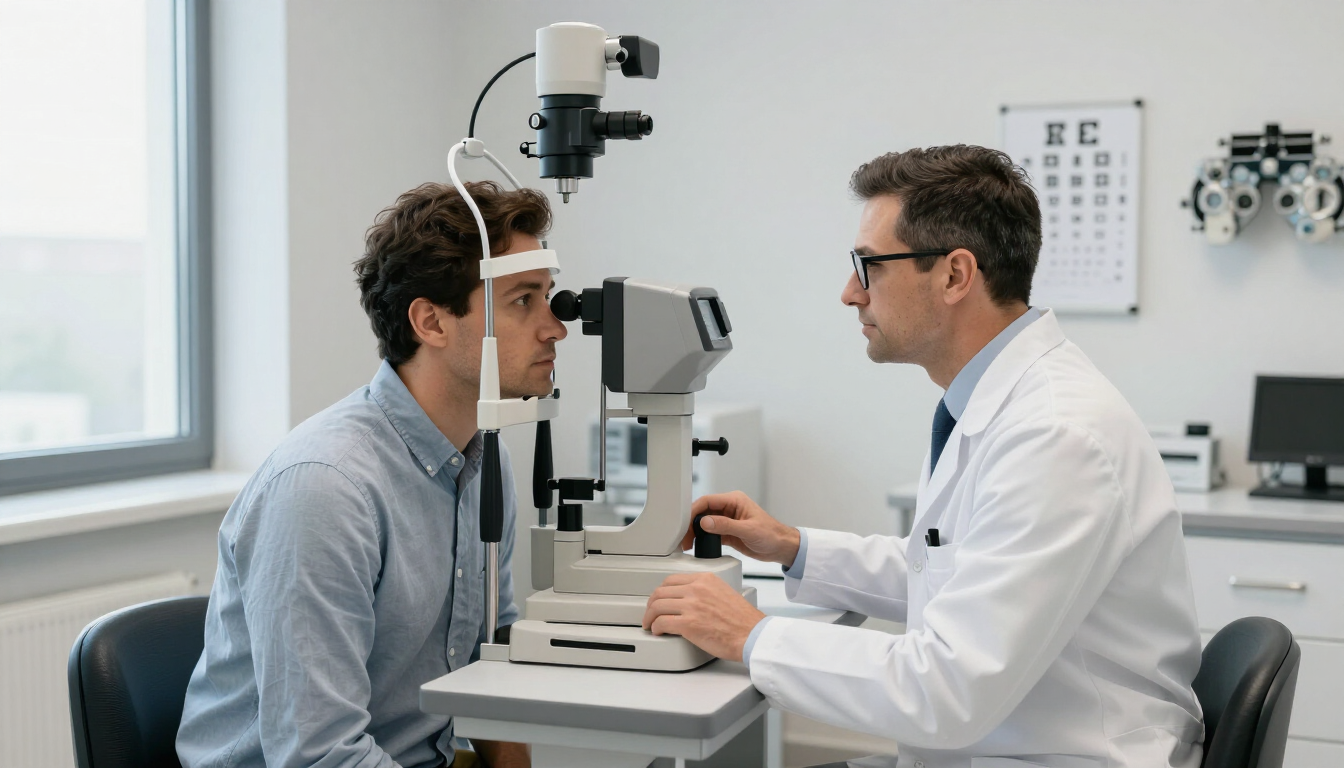
Perspective Eye Care uses a layered testing strategy. Each test adds a piece to the puzzle, and together they provide a clear picture of risk and status.
IOP measurement (tonometry)
Measures eye pressure, an important risk factor. Elevated IOP can increase the likelihood of optic nerve damage, but normal IOP does not rule glaucoma out.
Pachymetry
Measures corneal thickness. Thicker or thinner corneas can make an IOP reading look lower or higher than it truly is. Pressure is always interpreted in the context of pachymetry to avoid false reassurance or overestimation.
Optical Coherence Tomography (OCT)
Think of OCT as a high-resolution 3D scan that measures the retinal nerve fiber layer and the ganglion cell complex. Results are compared to age-matched norms and, crucially, to your own baseline over time.
Visual field testing
A computerized map of peripheral and central vision that detects functional loss. OCT shows structure; fields show function. Tracking both helps detect progression earlier.
Ultra-widefield Optos imaging
Captures around 200 degrees of the retina to document optic nerve appearance and survey the retina for other conditions that can mimic or complicate glaucoma. These images are stored for year-to-year comparison.
Trends matter more than a single snapshot. The team establishes a personal baseline and monitors for change. Small, consistent shifts are often more meaningful than one borderline reading.
Normal eye pressure ranges and the myth of “normal for a 70 year old”
For most adults, typical IOP falls between about 10 and 21 mmHg. There is no separate “normal for a 70 year old.” Age does not create its own safe pressure zone. Some people develop damage at pressures in the mid-teens, while others tolerate higher pressures without detectable harm.
Your safe range is personal and depends on optic nerve health, corneal thickness, blood flow, and other risk factors. This is why glaucoma specialists never rely on pressure alone to diagnose or dismiss disease.
Can you lower eye pressure naturally?
Lifestyle choices can support overall eye health, but they are not a substitute for medical treatment when glaucoma is present.
Helpful habits may include:
- Regular moderate exercise
- Staying hydrated throughout the day
- Avoiding very large fluid intake all at once
- Moderating caffeine intake
- Avoiding prolonged head-down yoga positions if you are at risk
If you are already being treated for glaucoma, speak with your provider before starting new supplements or exercise routines. Only prescription drops, laser therapy, or surgery have proven, consistent effects on lowering IOP when treatment is medically necessary.
Can eye tests detect glaucoma?
Yes. Eye exams that include IOP testing, optic nerve evaluation, OCT, and visual field testing can detect glaucoma risk and early damage, often before symptoms appear. The key is comprehensive testing plus ongoing comparisons to your personal baseline.
Coverage basics: insurance and Medicare
Glaucoma evaluations, diagnostic testing, and follow-up visits are medical services. Medicare and most medical insurance plans typically cover medically necessary glaucoma visits and testing.
Routine glasses checks usually fall under vision benefits, but when assessing disease risk or managing glaucoma, visits are billed medically. Coverage varies by plan, and the Perspective Eye Care team verifies benefits and explains potential out-of-pocket costs before testing begins.
Who is at higher risk and how often to screen
Anyone over 40 should consider a comprehensive eye exam every 1 to 2 years, and annually after 60. More frequent checks may be appropriate if you have:
- Diabetes
- A family history of glaucoma
- High myopia
- A history of eye injury
- African, Hispanic/Latino, or Asian ancestry
Your screening schedule should be personalized based on your risk profile and clinical findings.
FAQ: quick answers to common questions
What are the 8 signs of glaucoma?
Halos around lights, hazy or blurred vision, one-sided or severe eye pain or headache, redness with pain or nausea, sudden loss of side vision, frequent glasses prescription changes, increased light sensitivity or glare, and a family history plus any new visual symptom.
What is the normal eye pressure for a 70 year old?
Typical adult IOP is about 10 to 21 mmHg. There is no separate normal by age. Your safe pressure is individualized based on optic nerve health and other risk factors.
Can I lower my eye pressure naturally?
Healthy habits help, but they do not replace treatment. Regular exercise, hydration, and caffeine moderation may support gentle IOP control. Only prescribed therapies reliably lower IOP when glaucoma is diagnosed.
Can eye tests detect glaucoma?
Yes. A comprehensive exam with IOP measurement, pachymetry, OCT, visual fields, and optic nerve assessment can detect glaucoma risk and early damage.
Do you get a free eye test with glaucoma?
Medicare and many medical insurance plans typically cover medically necessary glaucoma visits and testing. Exact coverage depends on your plan. The office team will verify benefits and discuss any costs in advance.
Why choose Perspective Eye Care for glaucoma monitoring
Perspective Eye Care combines fellowship-level expertise with advanced diagnostics and a patient-first approach. The team explains findings clearly, establishes a reliable baseline, and monitors trends so subtle changes are caught early.
If surgical or laser intervention becomes appropriate, they coordinate care with trusted ophthalmology partners and keep your primary providers informed throughout treatment.
Next steps
Do not wait for symptoms to appear. Book a comprehensive glaucoma screening at Perspective Eye Care in Bellport or Coram. Same-week appointments are often available, and the staff can verify Medicare and insurance coverage for medical testing before your visit.
Call 631-286-4014 or
contact the office
online to protect your vision with smart screening, advanced diagnostics, and careful long-term monitoring.
More Posts Like This