Madhu Dutta • March 27, 2026

Understanding Dry Eye Disease Causes: A Guide by Perspective Eye Care


Book an Appointment

At Perspective Eye Care, our caring team of optometrists and eye care specialists are committed to helping you see and feel your best — because healthy vision starts with a healthy ocular surface. If you've noticed your eyes feeling scratchy, tired, or irritated lately, you're not alone. Dry Eye Disease (DED), also known as keratoconjunctivitis sicca, is one of the most common conditions we identify during comprehensive eye exams — and it affects women over 55 more than almost any other group. The hormonal shifts that naturally occur during and after menopause can directly impact your tear glands, reducing both tear volume and tear quality, and leaving your ocular surface vulnerable to irritation and inflammation. Your tear film is actually made up of three protective layers working together — the lipid layer from your meibomian glands, the aqueous layer from your lacrimal glands, and the mucin layer from your goblet cells — think of them as a shield that keeps your eyes comfortable and your cornea lubricated. When even one of those layers is out of balance, it can lead to corneal exposure and make everyday activities like reading, driving, or screen time uncomfortable and difficult to enjoy.

How Your Daily Routine and Environment Play a Role

Dry Eye Disease rarely has a single cause — and that's something our optometrists hear about every day. The most common culprit we diagnose is Meibomian Gland Dysfunction (MGD), a condition where the meibomian glands in your eyelids become blocked, reducing the lipid layer of your tear film. Without that protective oily coating, tears evaporate too quickly, leaving your cornea exposed, irritated, and vulnerable to ongoing ocular surface inflammation.

The Role of Age, Hormones, and Your Medical History

You may be surprised to learn that your lifestyle habits can have a direct impact on your tear film health. Prolonged screen time — whether on a phone, tablet, or computer — naturally reduces your blink rate, which means your tears aren't being evenly redistributed across your ocular surface. At the same time, everyday environmental factors like air conditioning, indoor heating, and wind can accelerate tear evaporation, triggering that familiar gritty, burning, or stinging sensation that so many of our patients describe.

The Role of Age, Hormones, and Your Medical History

As we get older, our lacrimal glands gradually produce fewer tears — and for women, the hormonal changes that come with menopause can further reduce both tear volume and tear quality. This is why chronic dryness is so prevalent in women over 55. Certain medications can also quietly contribute to the problem. Antihistamines, antidepressants, and blood pressure treatments are among the most common prescription-related dry eye disease causes we uncover. Autoimmune conditions such as Sjögren's syndrome, rheumatoid arthritis, and lupus can also compromise your goblet cells and aqueous layer, making a thorough review of your medical history an essential part of your care.

How Perspective Eye Care Diagnoses and Treats Dry Eye Disease

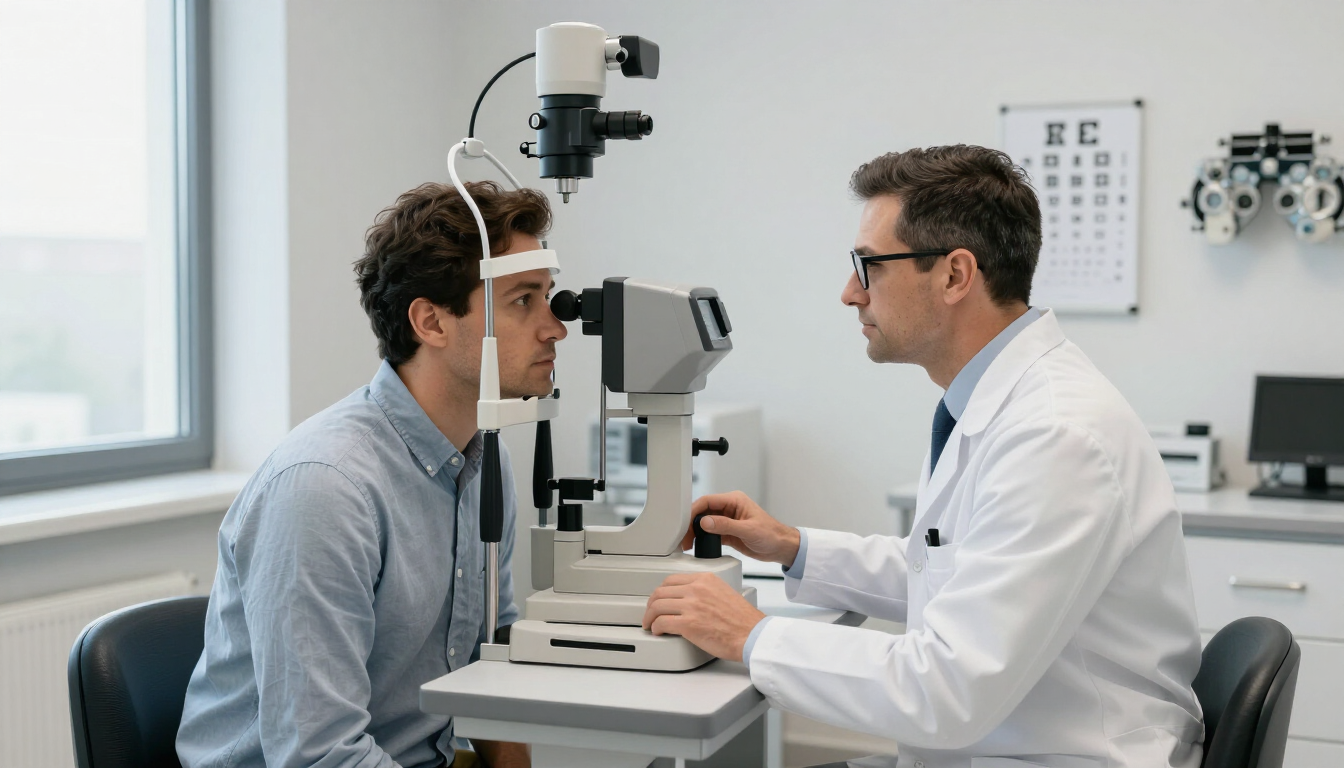
Getting the right treatment starts with getting the right diagnosis. Our team uses advanced comprehensive eye exams to evaluate your tear film stability, measure tear volume, and assess the health of your cornea and ocular surface. Whether you're experiencing watery eyes — a common reflex response to dryness — blurred vision that shifts when you blink, or persistent light sensitivity, we have the tools and expertise to pinpoint exactly what's driving your discomfort. From clinically proven treatment options to personalized lifestyle modifications, we'll build a care plan that works for your eyes and your life.

Protecting your vision for the long term
Dry Eye Quiz

More Posts Like This

A woman and two children lying close, smiling at the camera. They are indoors.
November 21, 2025
Is Your Child A Candidate For Myopia Management? Rapidly progressing myopia is more than just a hassle — today’s research shows that it will put your child at increased risk of developing serious eye diseases in late adulthood, such as glaucoma, cataracts, retinal detachment and macular degeneration. Fortunately, Dr. Brian Cho can help slow the progression of your child’s myopia with a customized myopia management program. What is Myopia Management? Myopia management is an evidence-based program that can halt or slow the progression of myopia in children. Each myopia management treatment has varying benefits and levels of efficacy; Dr. Brian Cho can help you decide which method is most suitable for your child depending on their age and myopia level. Is Myopia Management Right for My Child? The ideal candidate for myopia management is a child or young adult with practically any degree of myopia. Although it’s best to begin myopia management as early as possible, many older children, teens, and college students can still benefit from this treatment. But first, here are a few factors to consider before embarking on a myopia management program: The patient must be at least 6 or 7 years of age He or she must be willing and able to care for contact lenses Must have a certain level of maturity and responsibility Below are some examples of myopia management patients: A 9-year-old recently diagnosed with myopia is already noticing the need to increase her prescription. She begins myopia management to slow down or stop her deteriorating distance vision. This is a great time to start myopia management, as it offers the best chance of preserving long-term eye health. Myopia management is also suitable for young teens or pre-teens. A 12-year-old who wants to eliminate the need for daytime glasses or contact lenses may find certain myopia management treatments to be very appealing. A young teen who feels insecure about their appearance when wearing glasses, or who finds that glasses interfere with sports and other activities, may also find myopia management to be a great option. A 16-year-old teen with mild to moderate myopia hopes to undergo corrective surgery in the future. If they begin myopia management at 16, they have a good chance of stabilizing their vision until they meet the age requirements for corrective surgery a few years later. In addition to decreasing their risks of future eye disease, slowing their myopia progression may increase their chance of successful corrective surgery. We Can Help Control Your Child’s Myopia Myopia management works best when parents wish to take a proactive role in preserving their child’s vision in the long term. The earlier a child receives myopia management, the easier it is to control myopia’s progression and the better the long-term results. If your child has myopia, take action and help mitigate their risk of developing eye disease in the future. For further information or to schedule your consultation, contact Bellport Perspective Eye Care today. Our practice serves patients from Bellport, Coram, Patchogue, and Sayville, NY and surrounding communities. REFERENCES https://optometry.nova.edu/ce/orlandoweekend/micklesteabcoamyopia https://www.mykidsvision.org/blog/when-to-start-and-when-to-stop-myopia-management/
Close-up of brown eyes looking up, with a slight reflection in the iris.
November 21, 2025
Struggling with itchy, irritated eyes? Discover the most common causes of dry eye, from screen use to ageing, and find effective relief today.
Overhead view of eyeglasses, contact lens case, and blister packs with single-use contact lenses on a white surface.
November 21, 2025
Discover how scleral lenses provide superior comfort and clear vision for irregular corneas, dry eye, and keratoconus. Learn if they are right for you.