Specialty Contact Lenses for Hard-to-Fit Eyes in Bellport
If you've been told you're "not a good candidate" for contact lenses because of keratoconus, severe dry eye, high astigmatism, or previous eye surgery, it may simply mean you haven't tried the right type of lens.
Standard soft contact lenses work well for many people, but they cannot always compensate for irregular corneas or complex vision problems. That's where specialty contact lenses make a real difference. Designed specifically for challenging eyes, they can provide sharper vision, greater comfort, and renewed confidence in daily life.
At Perspective Eye Care Long Island, specialty contact lens fitting is one of our core services. Led by Dr. Brian Cho, O.D., M.S., F.A.A.O., we use advanced imaging and custom lens technology to create individualized solutions based on your eye shape, tear film, lifestyle, and visual goals.
What Are Specialty Contact Lenses?
Specialty contact lenses are custom-designed lenses created for patients who cannot achieve comfortable, stable vision with traditional soft contact lenses.
They are commonly prescribed for:
- Keratoconus
- Pellucid marginal degeneration
- High or irregular astigmatism
- Post-LASIK or post-RK vision changes
- Corneal transplants
- Severe dry eye disease
- Ocular surface disorders
- Corneal scarring
- Highly irregular corneas
Unlike standard disposable lenses, specialty lenses are individually fitted using detailed measurements of your cornea and tear film.
Common options include:
- Scleral lenses
- Rigid Gas Permeable (RGP) lenses
- Hybrid lenses
- Custom soft contact lenses
The right choice depends on your eye health, prescription, comfort needs, and lifestyle.
Scleral Lenses: The Gold Standard For Many Complex Eyes
Scleral lenses have transformed care for patients with irregular corneas and chronic dry eye.
These large-diameter rigid gas permeable lenses rest gently on the white part of the eye (the sclera) while completely vaulting over the cornea.
Before insertion, the lens is filled with preservative-free sterile saline, creating a liquid reservoir that remains over the cornea throughout the day.
This provides two major benefits:
- A perfectly smooth optical surface for clearer vision
- Continuous hydration for dry or damaged corneas
Because scleral lenses avoid direct contact with the sensitive cornea, many patients find them surprisingly comfortable after a brief adaptation period.
Scleral lenses are often recommended for:
- Keratoconus
- Severe dry eye disease
- Sjögren's syndrome
- Post-LASIK complications
- Corneal transplants
- Corneal ectasia
- High irregular astigmatism
- Patients who cannot tolerate other contact lenses
For many people, scleral lenses restore vision that glasses and traditional contacts cannot achieve.
Rigid Gas Permeable (RGP) Lenses
Rigid gas permeable lenses are much smaller than scleral lenses and sit directly on the cornea.
Although they require a slightly longer adaptation period, RGP lenses provide exceptional optical clarity because their rigid surface masks small corneal irregularities.
They are often an excellent choice for:
- Mild keratoconus
- Moderate astigmatism
- High prescriptions
- Patients seeking crisp vision with a smaller lens
RGP lenses also tend to be less expensive than scleral lenses while offering excellent durability.
Hybrid Contact Lenses
Hybrid lenses combine two different materials:
- A rigid gas permeable center for sharp vision
- A soft outer skirt for increased comfort
They are designed for patients who appreciate the optical quality of RGP lenses but prefer the feel of a soft contact lens.
Hybrid lenses may work well for:
- Early keratoconus
- Moderate irregular astigmatism
- Patients who struggle to adapt to traditional RGP lenses
Custom Soft Contact Lenses
Not every difficult prescription requires a rigid lens.
Custom soft lenses can be manufactured for patients with:
- High astigmatism
- Very high prescriptions
- Unusual corneal measurements
- Eyes outside standard lens parameters
They offer the familiar comfort of soft lenses while accommodating prescriptions that off-the-shelf lenses cannot.
How Specialty Contact Lens Fitting Works
A successful specialty fit involves much more than selecting a lens power.
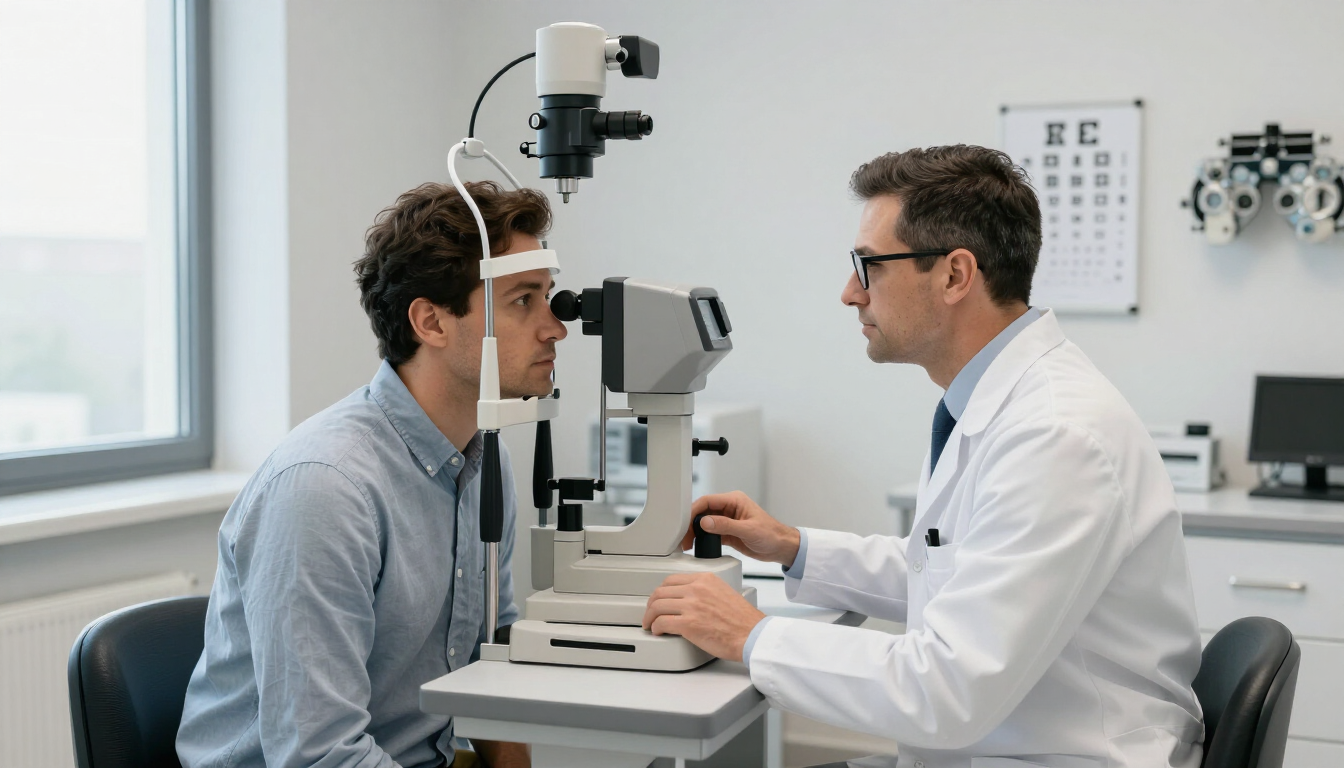
Comprehensive Eye Evaluation
We begin with advanced diagnostic testing, including:
- Corneal topography
- Corneal imaging
- Tear film evaluation
- Meibomian gland assessment
- Ocular surface examination
These measurements allow us to understand your unique eye anatomy.
Diagnostic Lens Trial
Rather than ordering a lens based solely on measurements, we apply diagnostic lenses during your visit.
We evaluate:
- Lens vault
- Corneal clearance
- Edge alignment
- Vision quality
- Lens movement
- Overall comfort
Adjustments are often made immediately to refine the fit.
Personalized Training
If you've never worn specialty lenses before, don't worry.
Our team provides one-on-one instruction covering:
- Lens insertion
- Safe removal
- Cleaning procedures
- Saline filling
- Daily maintenance
- Storage
You'll practice until you feel confident before taking your lenses home.
Follow-Up Care
Specialty fittings typically require follow-up visits to fine-tune the lens design as your eyes adapt.
We monitor:
- Vision
- Comfort
- Corneal health
- Lens performance
- Long-term eye health
How Long Does It Take To Adjust?
Most patients adapt quickly, although every lens type differs.
Scleral Lenses
Most people become comfortable within several days to two weeks.
Insertion and removal feel unfamiliar initially but soon become routine.
Corneal RGP Lenses
Because these lenses interact more with the eyelids, adaptation often takes a little longer—typically one to three weeks.
Patience during the adjustment period usually pays off with excellent long-term vision.
Daily Wear And Lens Lifespan
Most patients comfortably wear specialty lenses between 8 and 14 hours per day, depending on their eye health and treatment plan.
With proper care:
- Scleral lenses often last 1–2 years
- RGP lenses frequently last 1–2 years
- Replacement timing varies based on prescription changes, deposits, and normal wear
Routine follow-up appointments help determine when replacement is appropriate.
Common Challenges (And How We Solve Them)
Midday Fogging
Occasionally proteins or debris accumulate beneath scleral lenses.
Solutions may include:
- Adjusting lens fit
- Improving tear quality
- Treating dry eye
- Modifying cleaning routines
Dryness
If dryness persists despite specialty lenses, underlying conditions such as meibomian gland dysfunction may require treatment alongside your contact lenses.
Handling Difficulties
Nearly every new wearer finds insertion challenging at first.
With practice—and our hands-on coaching—it quickly becomes second nature.
Costs And Insurance
Specialty contact lenses are custom medical devices, so pricing reflects:
- Advanced diagnostics
- Custom manufacturing
- Professional fitting
- Follow-up adjustments
- Ongoing care
Exact costs vary depending on your condition and lens design.
Many insurance plans provide benefits when specialty lenses are considered medically necessary, particularly for conditions such as:
- Keratoconus
- Corneal ectasia
- Corneal transplant
- Severe ocular surface disease
Our team will:
- Verify your insurance benefits
- Explain expected out-of-pocket costs
- Review financing options if needed
FSA and HSA funds can often be used for eligible services and specialty lenses.
Frequently Asked Questions
What is a specialty contact lens?
A specialty contact lens is a custom-designed lens created for patients whose eyes cannot achieve comfortable, clear vision with standard soft contacts. Options include scleral, RGP, hybrid, and custom soft lenses.
How many hours can you wear scleral lenses?
Most patients comfortably wear scleral lenses for 8 to 14 hours per day, although your doctor will recommend a schedule based on your individual eye health.
Can scleral lenses provide 20/20 vision?
Many patients achieve excellent vision with scleral lenses because the liquid reservoir creates a smooth optical surface. Results depend on your underlying eye condition and overall ocular health.
What are the disadvantages of scleral lenses?
The primary considerations include:
- Higher initial cost
- Learning insertion and removal
- Daily cleaning requirements
- Possible midday fogging
- Follow-up visits for optimization
Most patients find these manageable once they become accustomed to the lenses.
Will insurance cover specialty contact lenses?
Insurance may contribute when lenses are considered medically necessary. Coverage varies by plan, and our team will verify your benefits before treatment.
Ready To See Clearly Again?
If you've struggled with blurry vision, uncomfortable contact lenses, keratoconus, severe dry eye, or post-surgical vision changes, specialty contact lenses may provide the solution you've been looking for.
Schedule a specialty contact lens consultation with Bellport Perspective Eye Care in Bellport or Coram. We'll perform advanced corneal mapping, evaluate your tear film, trial custom lens designs, and guide you through every step of the fitting process so you can enjoy clearer, more comfortable vision.
If you'd like to learn more, explore our Keratoconus Scleral Lens page to see how scleral lenses restore vision for irregular corneas, or read our guide to Dry Eye Disease Management to understand how treating ocular surface disease can improve specialty lens comfort and long-term success.
We welcome physician referrals for specialized care. If you suffer from frequent headaches, you may want to learn if your migraines might be a vision problem in disguise.
We offer advanced glaucoma screening and early signs technology and also provide care for families when their teen's vision is changing.
More Posts Like This