Custom-fit scleral lenses help patients with corneal distortions and irregularities achieve dramatic improvements in visual acuity and comfort. Scleral lenses vault over the cornea and prevent discomfort by resting on the sclera so as not to place any pressure on the cornea. This creates a new optical surface to replace the distorted cornea. Moreover, the reservoir of pure saline solution between the back surface of the lens and the front of the cornea ensures that the eye is always in a liquid environment – making it optimal for healing.
Due to their size, scleral lenses are more stable on the eye than conventional GP lenses and are therefore less likely to accidentally dislodge from the eye. This stability makes them more comfortable, especially for sensitive eyes or irregularly shaped corneas. Moreover, all scleral lenses are made with highly breathable gas permeable material so that plenty of oxygen reaches the front of the eye, keeping it healthy and comfortable.
Types of Scleral Lenses
These three categories are based on the lenses’ size and primary contact with the surface of the eye.
- Corneo-scleral lenses and semi-scleral lenses are significantly larger than traditional GP lenses and rest near the junction between the cornea and the sclera.
- Mini-scleral lenses vault over the whole corneal surface and rest on the anterior sclera.
- Full scleral lenses are the largest in size and provide the most clearance between the back surface of the lens and the cornea.
If you are interested, contact Bellport Perspective Eye Care to find out if scleral lenses are right for you. Our staff helps patients from all over Bellport and Coram, NY, and Dr. Brian Cho will provide a comprehensive evaluation and the highest level of care.
Scleral Lenses Provide More Comfort and Improved Vision
Our patients report comfort as the most prominent feature of the scleral lens. Throughout the fitting process, we survey our patients on how the lenses feel, and not surprisingly, the usual feedback we get is “fine” or “I can’t feel them at all”.
Traditional contact lenses are much smaller, typically 9 -10 mm in diameter. With each blink, the contact lens moves a bit over the cornea and the lid tends to roll over the edge of the lens as well. Many patients report being unable to wear them for more than a few hours at a time due to the discomfort.
The scleral lens, on the other hand, is larger in diameter and spreads its weight over a much greater, less sensitive area so that when you blink the eyelid doesn’t catch the edge of the lens. Because the lens sits firmly on the eye, it offers more stable vision than traditional lenses. Moreover, having the lens vault over the cornea protects it from any abrasion caused by blinking or external irritants. It is made up of highly oxygen permeable materials and provides a soothing bath of artificial tears that refresh the ocular surface. Scleral lenses not only improve comfort but make for more stable vision.
Who is a Good Candidate for Scleral Lenses?
Anyone seeking to achieve the best vision with contact lenses is a great candidate for scleral lenses. That said, these lenses are particularly useful in managing the following conditions:
Hard-to-fit eyes: Those with an irregularly shaped cornea, whether due to natural causes, an eye condition (i.e. keratoconus), or complications following surgery, tend to develop vision problems which cannot be fully corrected using soft contact lenses, as the shape of their eye cause the lenses to easily dislodge. For those people, scleral lenses provide a more comfortable, secure fit and improved vision, which may be even better than glasses.
Any of the following conditions can make wearing traditional contact lenses more challenging:
- Keratoconus
- Astigmatism
- Dry Eyes
- Giant papillary conjunctivitis (GPC)
- Post-refractive surgery (i.e. LASIK, PRK)
- Presbyopia
Dry Eyes: Those with dry eyes may find traditional contact lenses difficult to wear. Scleral lenses provide a tear reservoir between the back surface of full scleral lenses and the cornea, keeping the front of your eye moist and comfortable.
Can Children Wear Scleral Lenses?
Young children (over 6 months of age) with an ocular surface disease or severe dry eyes can benefit from wearing full scleral lenses, as they need to protect as much of the eye as possible.
Mini-scleral lenses, typically ranging from 15.0mm to 18.0mm in size, and are a great choice for young children with normal corneas and high refractive errors or for those who have irregular corneas such as keratoconus. Mini-scleral are also great for kids who are intolerant to corneal GP lenses and want the comfort of a soft contact lens.
What happens during scleral lens fitting?
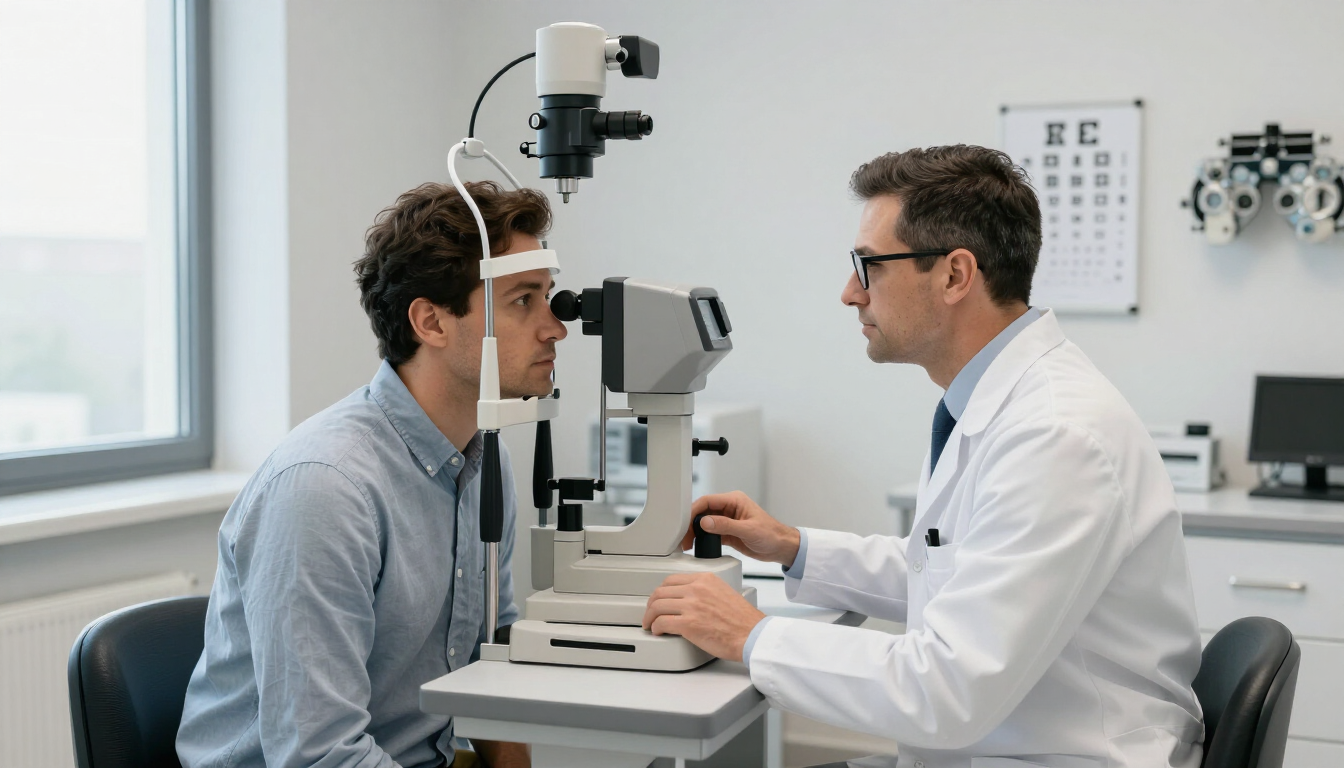
We carefully map the patient’s cornea using the latest corneal topography equipment. This generates a detailed diagram of your cornea, which is used to make customized scleral contact lenses.
How difficult is it to insert and care for scleral lenses?
Initially, inserting scleral lenses can be challenging. But after a short period, and thorough training by the optometrist, inserting and removing contact lenses becomes habitual. Scleral lenses are very durable, easy to handle and are easy to care for once the patient is well trained.
What Changes Will I Notice with Scleral Lenses?
Once you have been properly fitted for scleral lenses, you can expect to gradually see improvements in clarity, color and detailed contrast between multiple images and objects within your visual field. The comfort you’ll experience will enable you to wear your custom-made scleral lenses all day long so that you can keep doing all the things you love – but with better vision.
Watch this video to learn how easy and comfortable they are to insert, remove, and wear all day.
When Should I See An Eye Doctor Specializing in Scleral Lenses?
If you are interested in seeing whether scleral lenses are right for you, make sure that the eye doctor you visit has the knowledge and experience required to correctly fit you for the lenses. Scleral lenses require precise customization, and every patient’s case varies in degrees of severity and corneal measurements.
Experts in scleral lenses, Dr. Brian Cho and the attentive staff at Bellport Perspective Eye Care will ensure that you receive top-notch eye care for all your vision needs.
Does Insurance Cover Scleral Lenses?
When it comes to scleral lenses, every insurance company is different. Some cover the examination and custom fitting, but not the actual lenses. Others may cover a portion of the cost or 100% of the cost, but only if other treatment methods have been exhausted. To understand the coverage and fees you can contact us or check with your specific insurance provider to understand the particulars.
Our practice serves patients from Bellport, Coram, Patchogue, and Sayville, NY and surrounding communities.
More Posts Like This